Salvaguarda KamayuráKamayurá Safeguarding
🔒 Portal🔒 Portal

O que estamos protegendo

What we are protecting

Vinte pranchas de grafismo

Twenty pattern panels

Cada grafismo é registrado em camadas: o desenho, a história contada pelo próprio povo, a observação botânica, o rito associado e a medicina que carrega. Nada entra aqui sem autorização de quem detém o conhecimento.

Each pattern is recorded in layers: the drawing, the story told by the people themselves, the botanical observation, the associated ritual and the medicine it carries. Nothing appears here without authorization from those who hold the knowledge.

Método

Method

Quem narra é quem detém

Those who hold the knowledge are those who narrate

Os textos em destaque nesta página são autodeclaratórios: são a fala dos próprios detentores sobre o que cada grafismo é, para que serve e quem pode usar. Não são interpretação de pesquisador. Quando um campo aparece vazio, é porque o registro ainda não foi feito — e não será preenchido por aproximação.

The highlighted texts on this page are self-declared: they are the knowledge holders' own words about what each pattern is, what it is for and who may use it. They are not a researcher's interpretation. Where a field is empty, it is because the record has not yet been made — and it will not be filled in by approximation.

16fichas escritas pela comunidaderecords written by the community
14com texto transcritowith transcribed text
20pranchas previstaspanels planned

As pranchas

The panels

O registro dos grafismos masculinos retoma com Takuman na semana seguinte ao Kuarup. Os grafismos femininos dependem da decisão das mulheres detentoras sobre o que pode ser documentado e em que condições.

Documentation of male patterns resumes with Takuman in the week following the Kuarup. Female patterns depend on the women knowledge holders' decision on what may be documented and under what conditions.

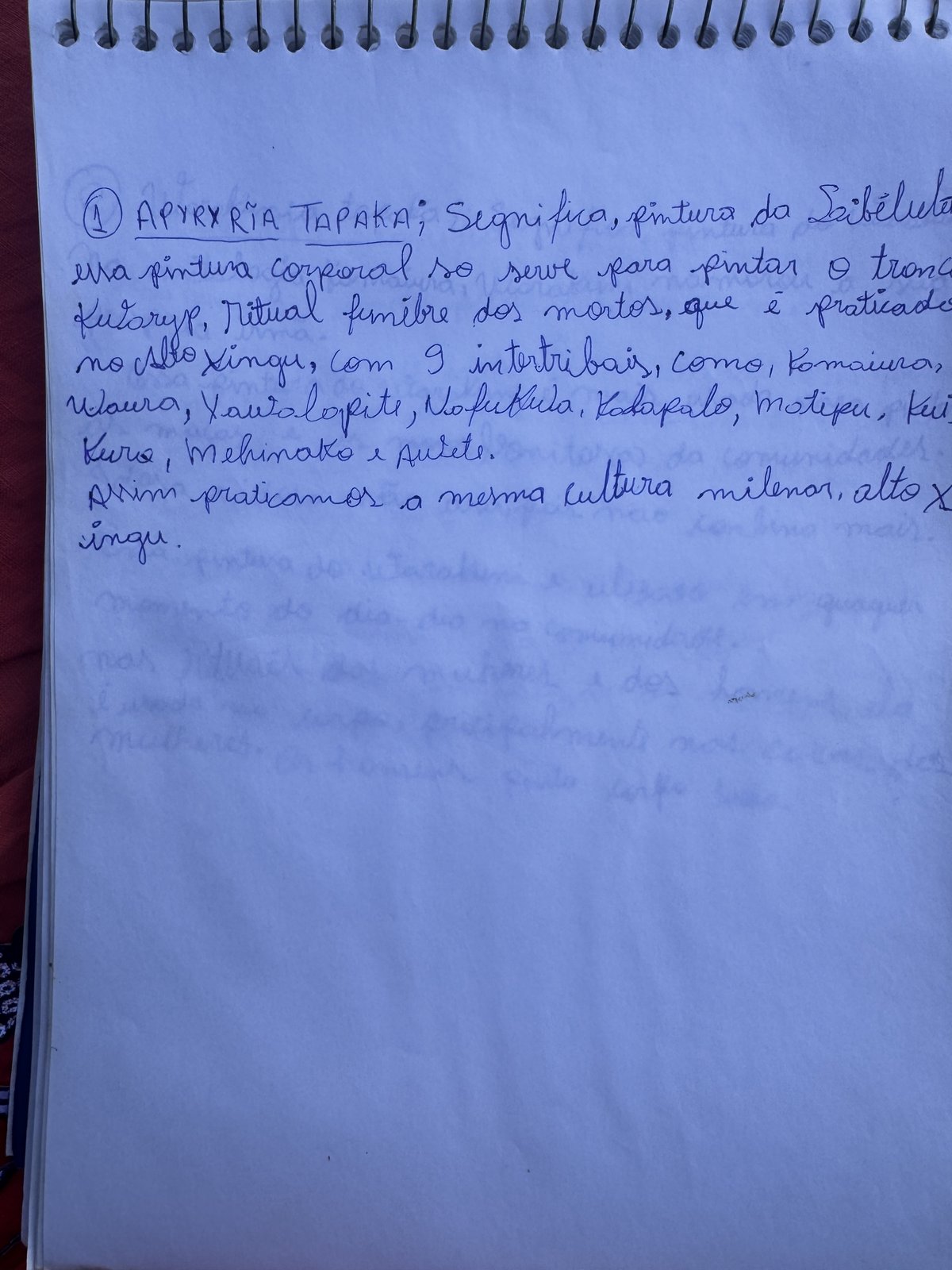
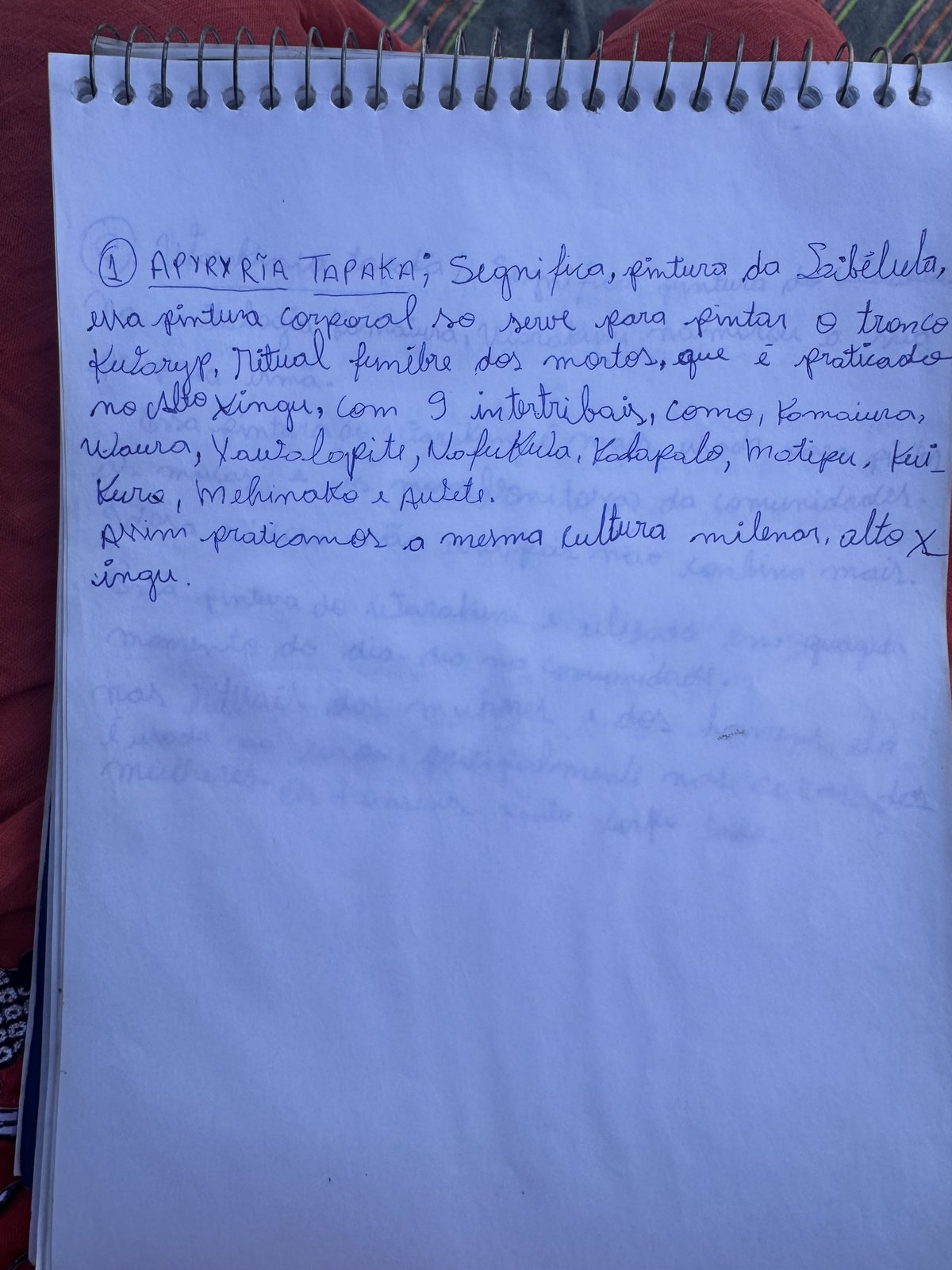
Ficha manuscrita 1 — APYRYRIA TAPAKA
01 · APYRYRIA TAPAKA

Significa: pintura da libélula

Means: Dragonfly pattern

Serve apenas para pintar o tronco do Kuarup, ritual fúnebre dos mortos praticado no Alto Xingu com nove povos: Kamayurá, Waurá, Yawalapiti, Nafukuá, Kalapalo, Matipu, Kuikuro, Mehinako e Aweti.

Used only to paint the Kuarup trunk, the funerary ritual of the Upper Xingu, shared by nine peoples.

"Assim praticamos a mesma cultura milenar, alto Xingu."Texto autodeclaratório · comunidade Kamayurá, 3 de julho de 2026
"This is how we practise the same millenary culture, Upper Xingu."Self-declared text · Kamayurá community, 3 July 2026
RitualRitual
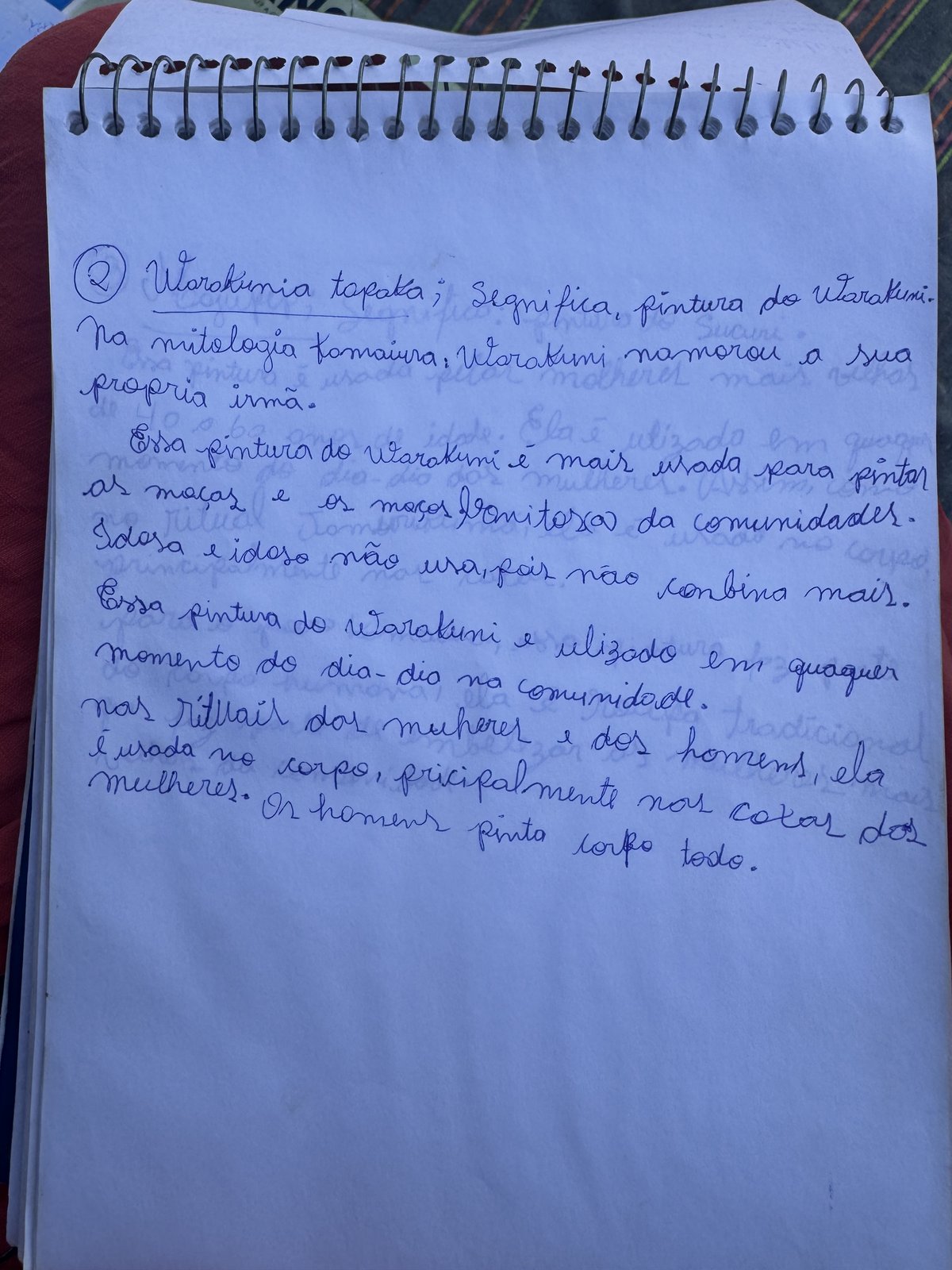
Ficha manuscrita 2 — WARAKUMIA TAPAKA
02 · WARAKUMIA TAPAKA

Significa: pintura do Warakumi

Means: Warakumi pattern

Na mitologia Kamayurá, Warakumi namorou a sua própria irmã. É usada para pintar as moças e os moços bonitos da comunidade — idosa e idoso não usam, pois não combina mais.

In Kamayurá mythology, Warakumi courted his own sister. Used to paint the young and beautiful of the community — elders do not wear it.

"Idosa e idoso não usa, pois não combina mais."Texto autodeclaratório · comunidade Kamayurá, 3 de julho de 2026
"Elders do not wear it, for it no longer suits them."Self-declared text · Kamayurá community, 3 July 2026
CotidianoEveryday
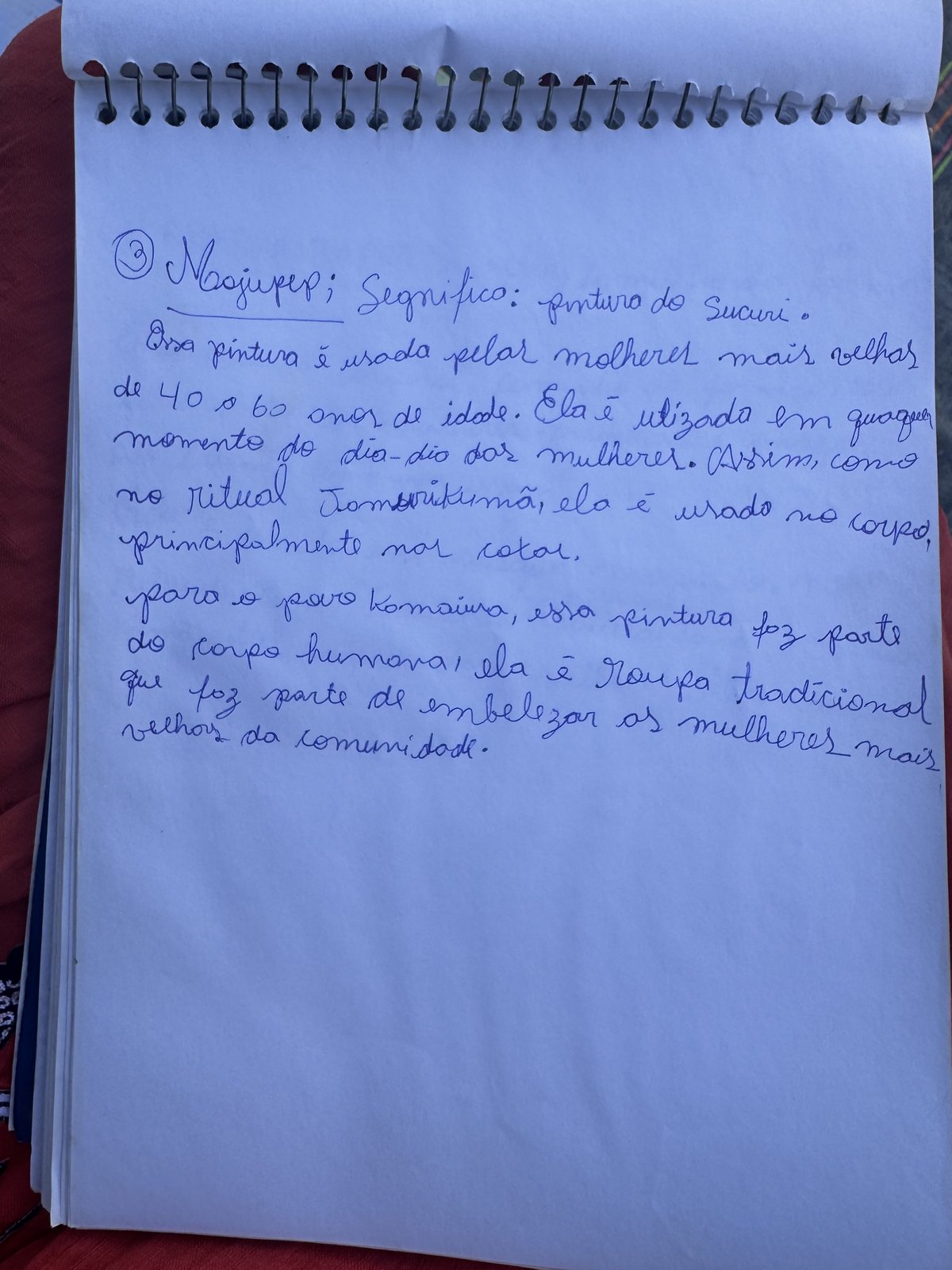
Ficha manuscrita 3 — MOJUPEP
03 · MOJUPEP

Significa: pintura do sucuri

Means: Anaconda pattern

Usada pelas mulheres mais velhas, de 40 a 60 anos. Utilizada no dia a dia e no ritual Jamurikumã, no corpo, principalmente nas costas.

Worn by older women, from 40 to 60. Used day to day and in the Jamurikumã ritual, on the body, mainly on the back.

"Para o povo Kamayurá, essa pintura faz parte do corpo humano — é roupa tradicional."Texto autodeclaratório · comunidade Kamayurá, 3 de julho de 2026
"For the Kamayurá, this pattern is part of the human body — it is traditional clothing."Self-declared text · Kamayurá community, 3 July 2026
FemininoFemale
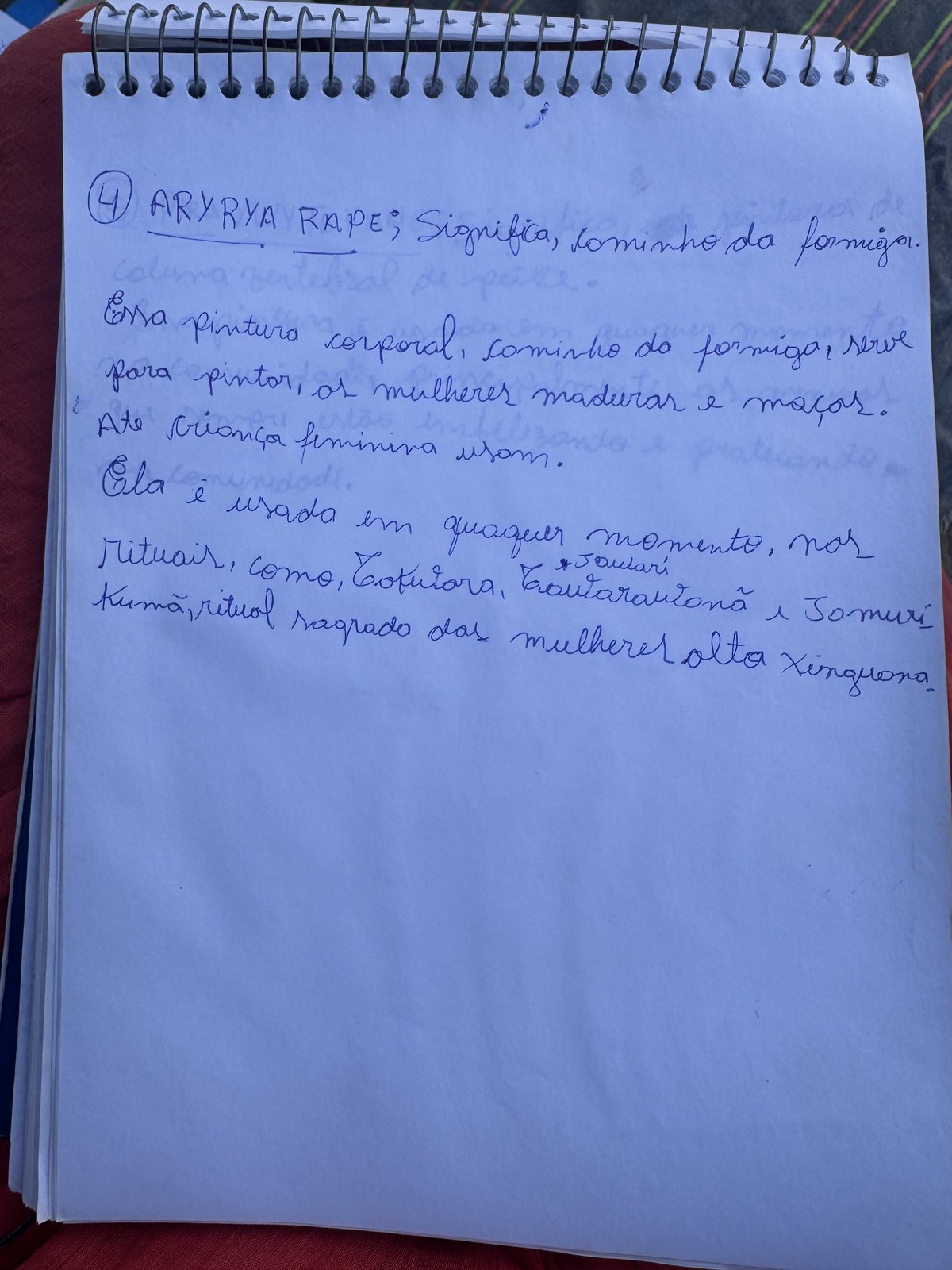
Ficha manuscrita 4 — ARYRYA RAPE
04 · ARYRYA RAPE

Significa: caminho da formiga

Means: Ant's path

Serve para pintar as mulheres maduras e as moças. Até criança feminina usa. Presente nos rituais Takutara, Tautarautonã (Jawari) e Jamurikumã.

Paints mature women and young women. Even girls wear it. Present in the Takutara, Tautarautonã (Jawari) and Jamurikumã rituals.

"Jamurikumã, ritual sagrado das mulheres alto-xinguanas."Texto autodeclaratório · comunidade Kamayurá, 3 de julho de 2026
"Jamurikumã, the sacred ritual of Upper Xingu women."Self-declared text · Kamayurá community, 3 July 2026
FemininoFemale
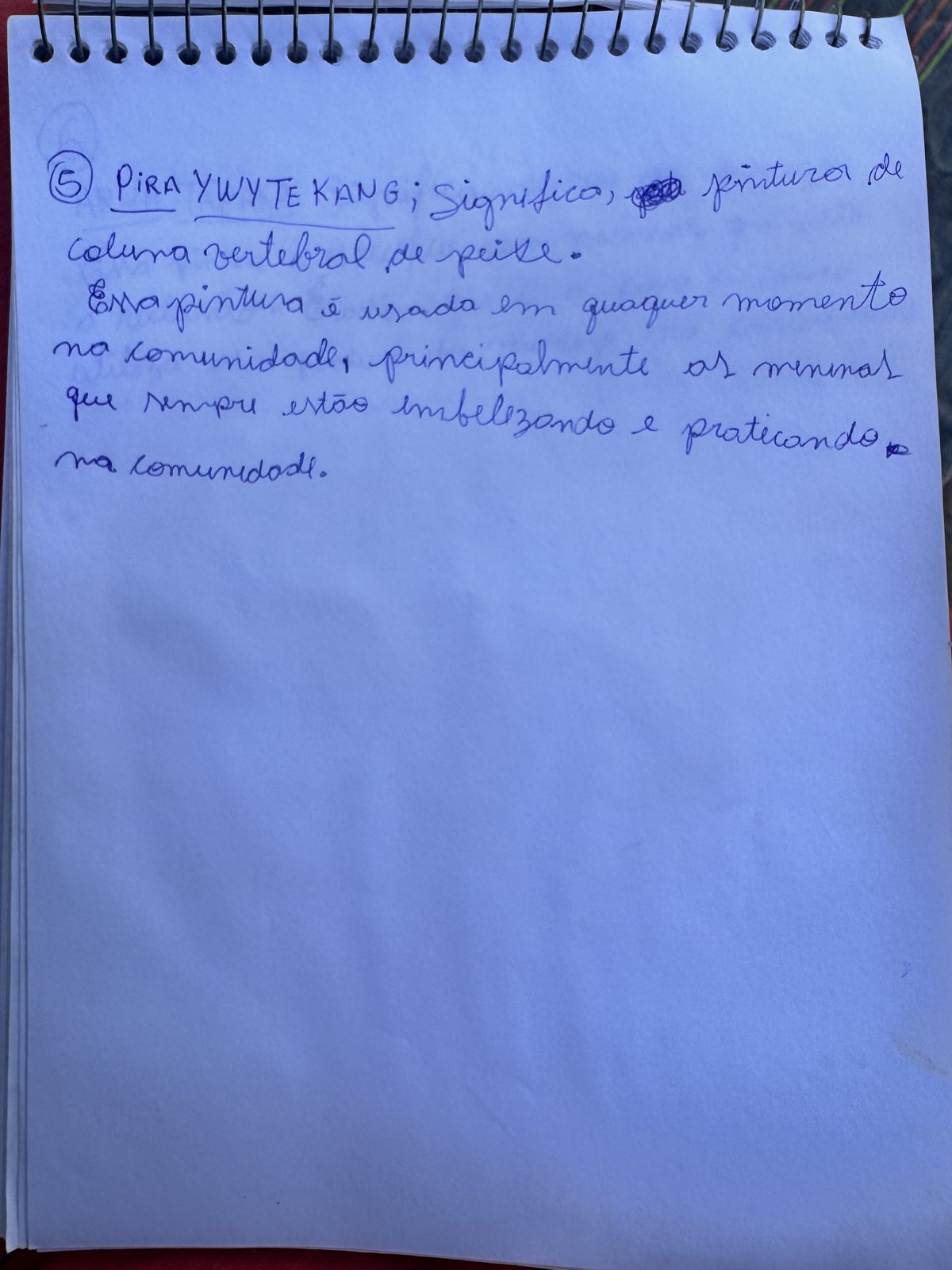
Ficha manuscrita 5 — PIRA YWYTE KANG
05 · PIRA YWYTE KANG

Significa: coluna vertebral de peixe

Means: Fish spine

Usada em qualquer momento na comunidade, principalmente pelas meninas.

Used at any moment in the community, mainly by girls.

"As meninas sempre estão embelezando e praticando na comunidade."Texto autodeclaratório · comunidade Kamayurá, 3 de julho de 2026
"The girls are always beautifying themselves and practising in the community."Self-declared text · Kamayurá community, 3 July 2026
CotidianoEveryday
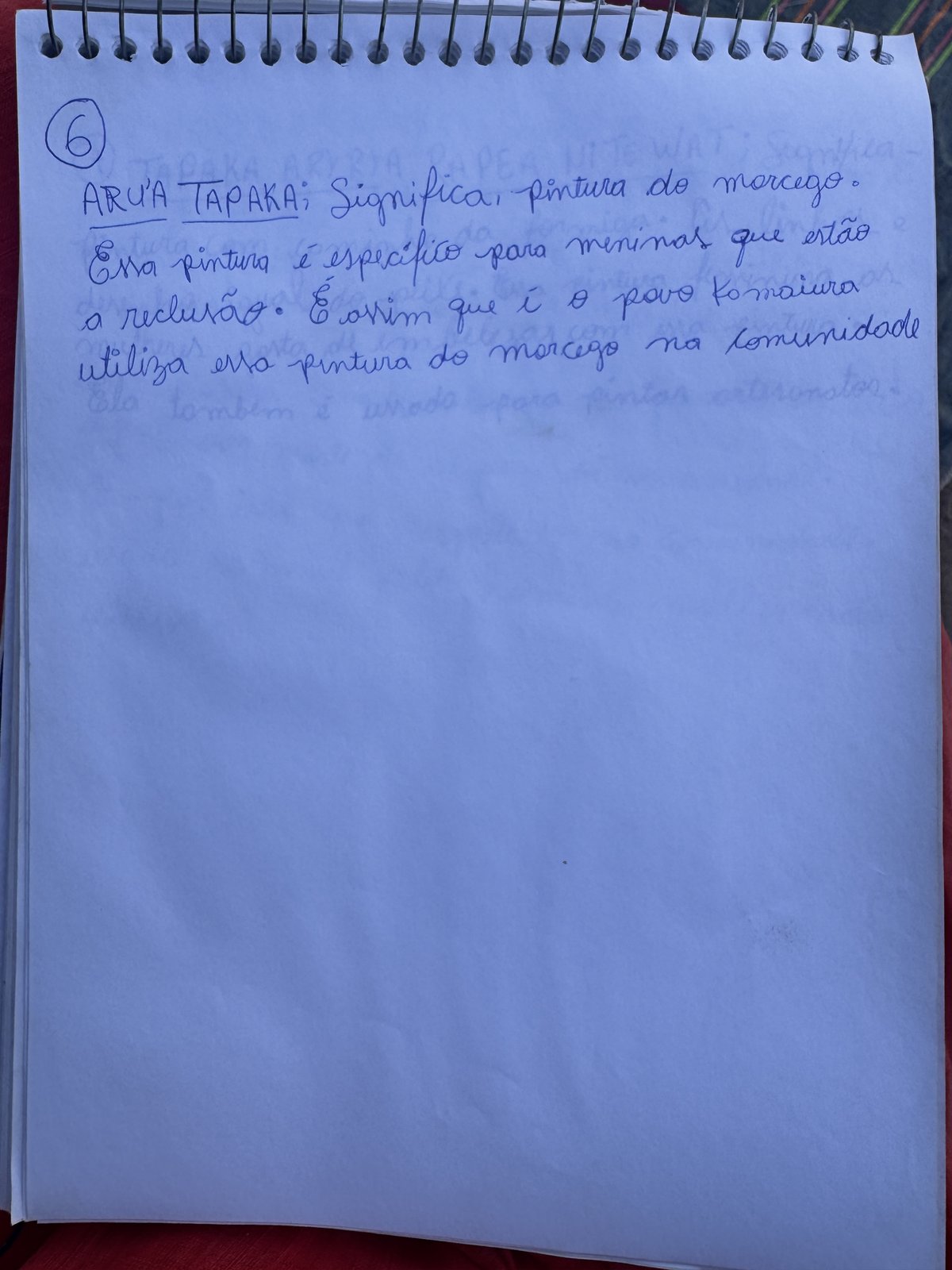
Ficha manuscrita 6 — ARU'A TAPAKA
06 · ARU'A TAPAKA

Significa: pintura do morcego

Means: Bat pattern

Específica para meninas que estão em reclusão — o período de formação que marca a passagem para a vida adulta.

Specific to girls in seclusion — the formative period marking the passage into adulthood.

"É assim que o povo Kamayurá utiliza essa pintura do morcego na comunidade."Texto autodeclaratório · comunidade Kamayurá, 3 de julho de 2026
"This is how the Kamayurá people use this bat pattern in the community."Self-declared text · Kamayurá community, 3 July 2026
FemininoFemale
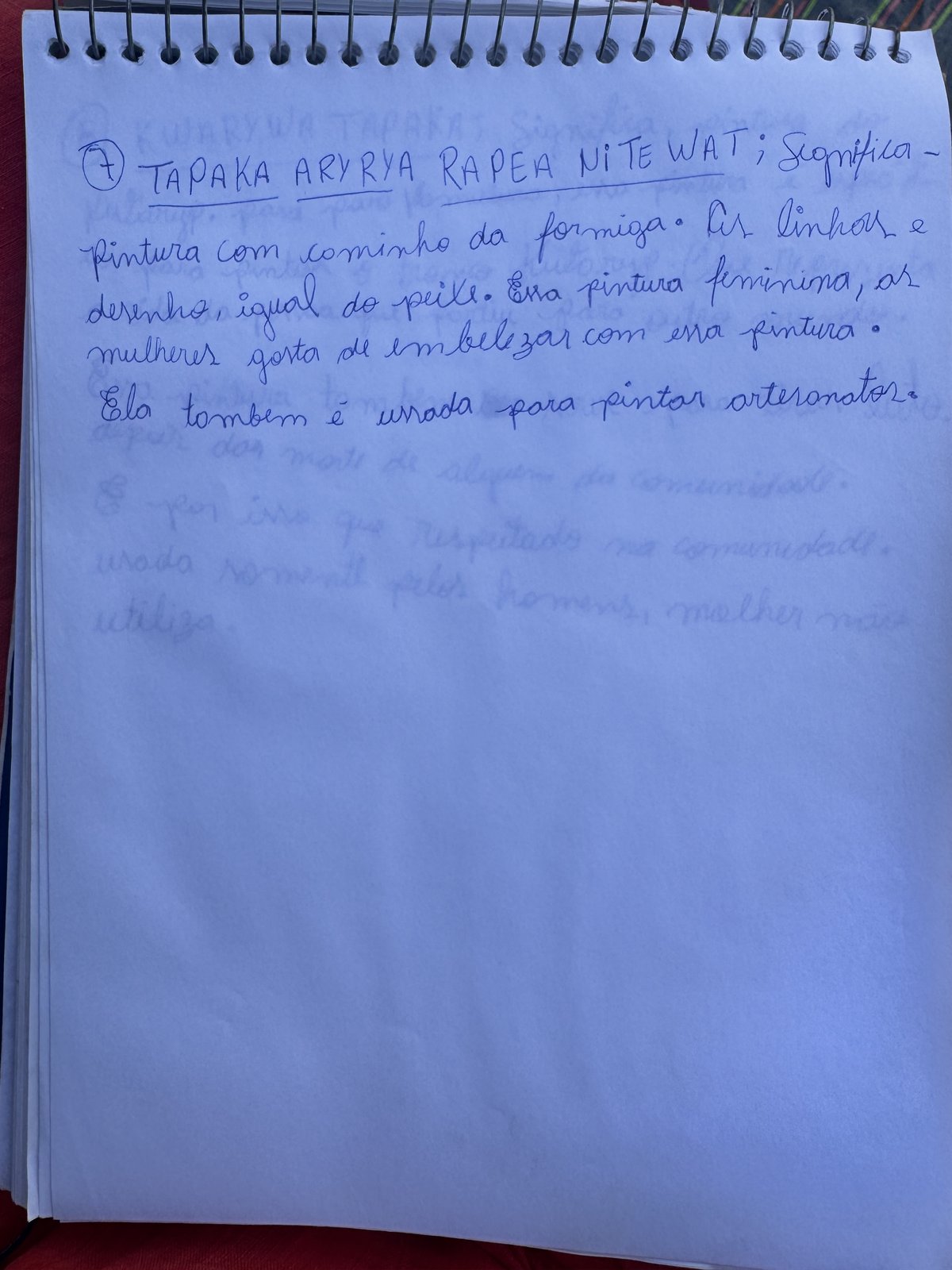
Ficha manuscrita 7 — TAPAKA ARYRYA RAPEA NITE WAT
07 · TAPAKA ARYRYA RAPEA NITE WAT

Significa: pintura com caminho da formiga

Means: Pattern with the ant's path

As linhas e o desenho são iguais aos do peixe. É pintura feminina — as mulheres gostam de se embelezar com ela. Também é usada para pintar artesanato.

The lines and drawing are the same as the fish. A female pattern — women like to beautify themselves with it. Also used on craftwork.

"Ela também é usada para pintar artesanatos."Texto autodeclaratório · comunidade Kamayurá, 3 de julho de 2026
"It is also used to paint craftwork."Self-declared text · Kamayurá community, 3 July 2026
FemininoFemale
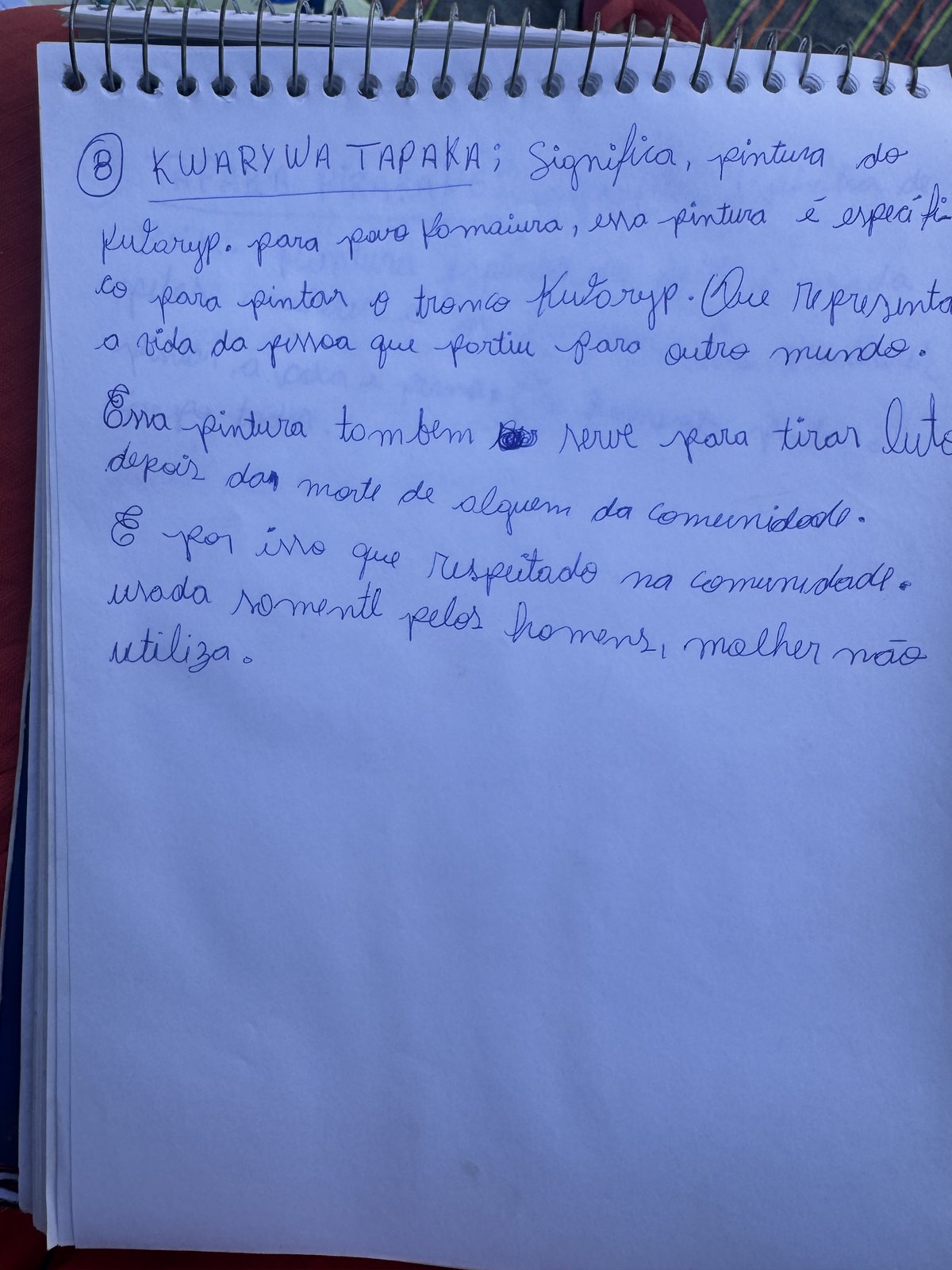
Ficha manuscrita 8 — KWARYWA TAPAKA
08 · KWARYWA TAPAKA

Significa: pintura do Kuarup

Means: Kuarup pattern

Específica para pintar o tronco do Kuarup, que representa a vida da pessoa que partiu para outro mundo. Serve também para tirar o luto depois da morte de alguém da comunidade.

Specific to painting the Kuarup trunk, which represents the life of the person who departed for another world. It also serves to lift mourning.

"Usada somente pelos homens. Mulher não utiliza."Texto autodeclaratório · comunidade Kamayurá, 3 de julho de 2026
"Used only by men. Women do not use it."Self-declared text · Kamayurá community, 3 July 2026
MasculinoMale
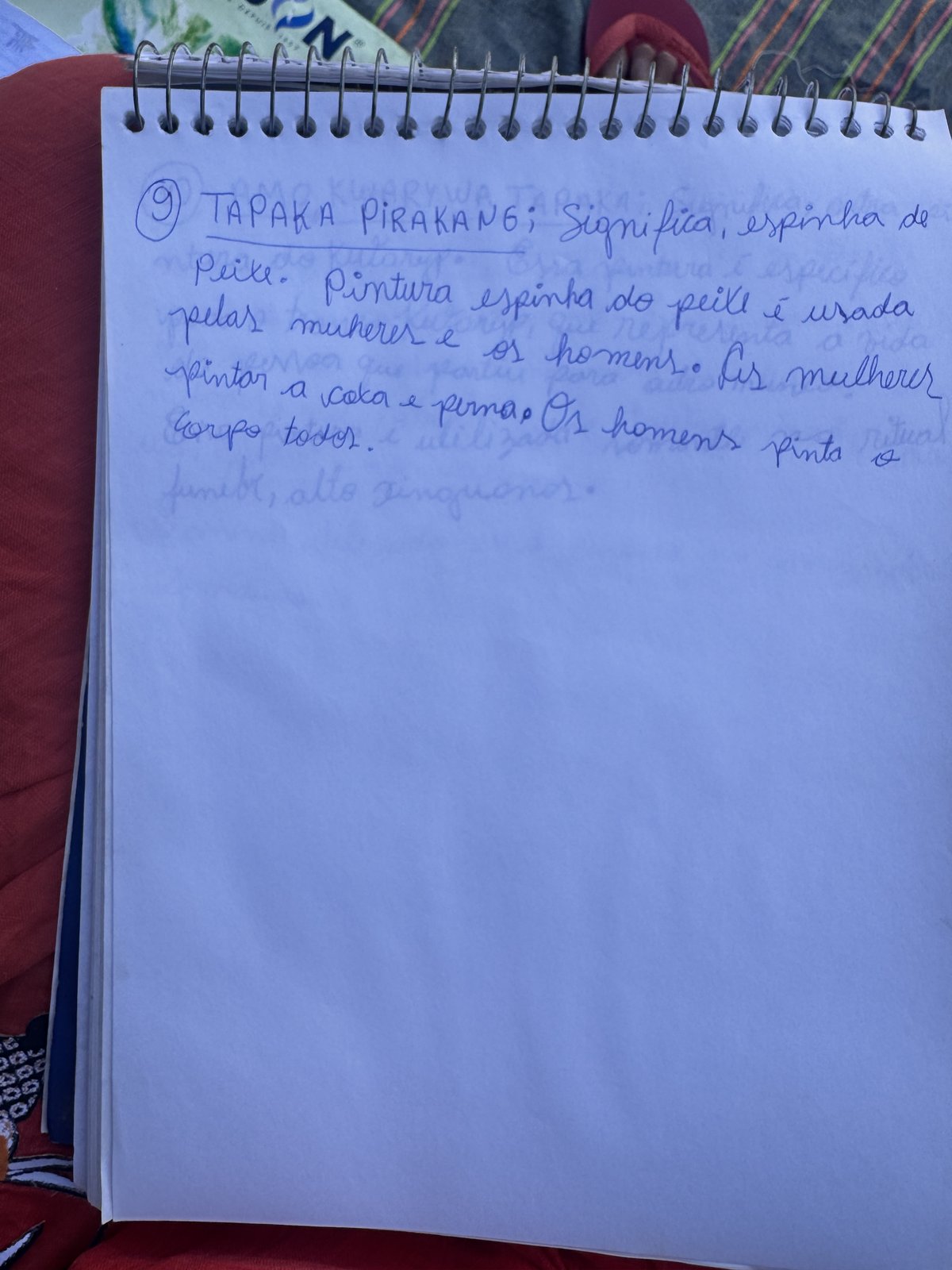
Ficha manuscrita 9 — TAPAKA PIRAKANG
09 · TAPAKA PIRAKANG

Significa: espinha de peixe

Means: Fish bone

Usada pelas mulheres e pelos homens. As mulheres pintam a coxa e a perna; os homens pintam o corpo todo.

Used by women and men. Women paint the thigh and leg; men paint the whole body.

"As mulheres pintam a coxa e a perna. Os homens pintam o corpo todo."Texto autodeclaratório · comunidade Kamayurá, 3 de julho de 2026
"Women paint thigh and leg. Men paint the whole body."Self-declared text · Kamayurá community, 3 July 2026
RitualRitual
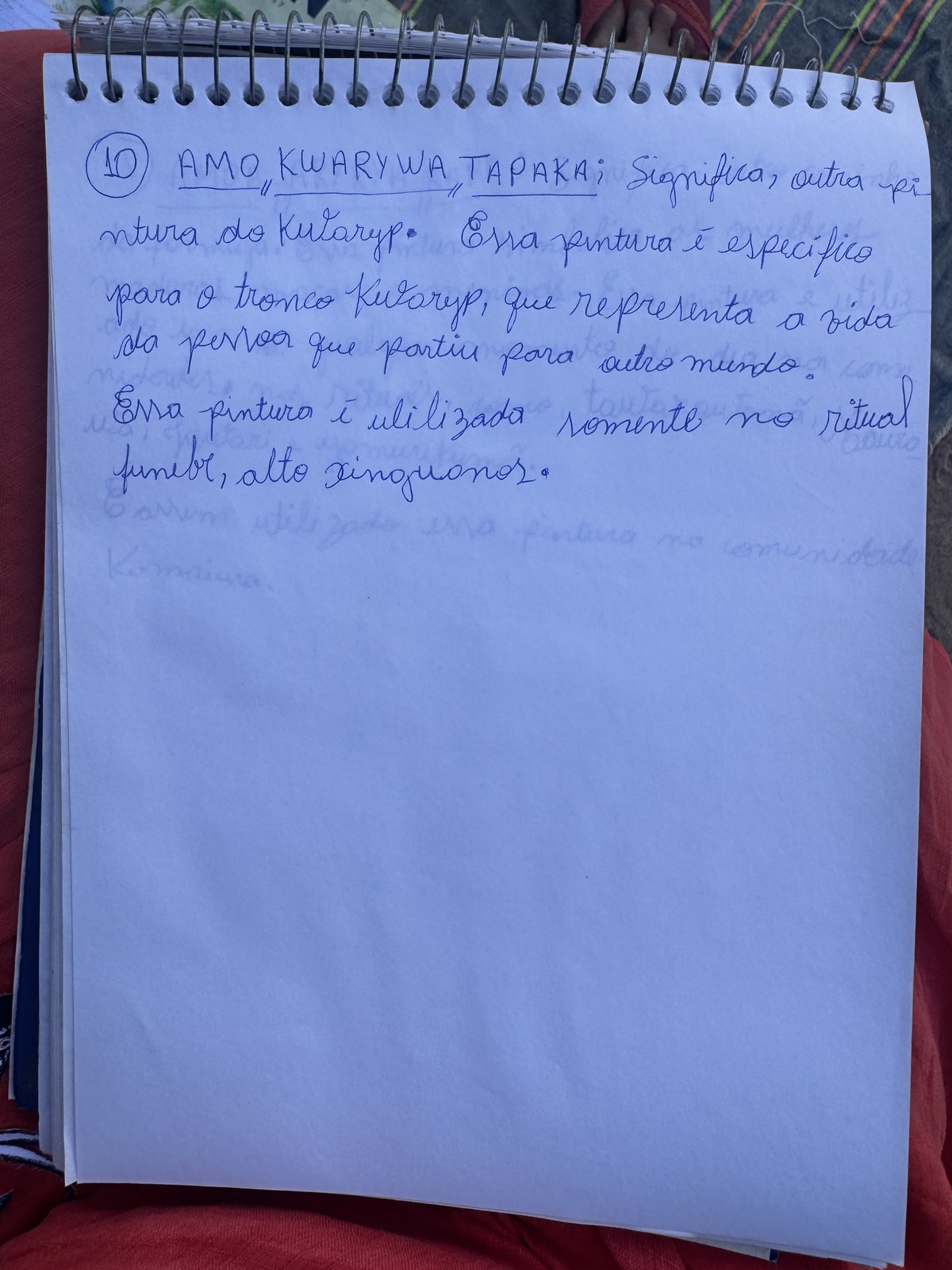
Ficha manuscrita 10 — AMO KWARYWA TAPAKA
10 · AMO KWARYWA TAPAKA

Significa: outra pintura do Kuarup

Means: Another Kuarup pattern

Específica para o tronco do Kuarup, que representa a vida da pessoa que partiu para outro mundo.

Specific to the Kuarup trunk, representing the life of the person who departed for another world.

"Utilizada somente no ritual fúnebre alto-xinguano."Texto autodeclaratório · comunidade Kamayurá, 3 de julho de 2026
"Used only in the Upper Xingu funerary ritual."Self-declared text · Kamayurá community, 3 July 2026
RitualRitual
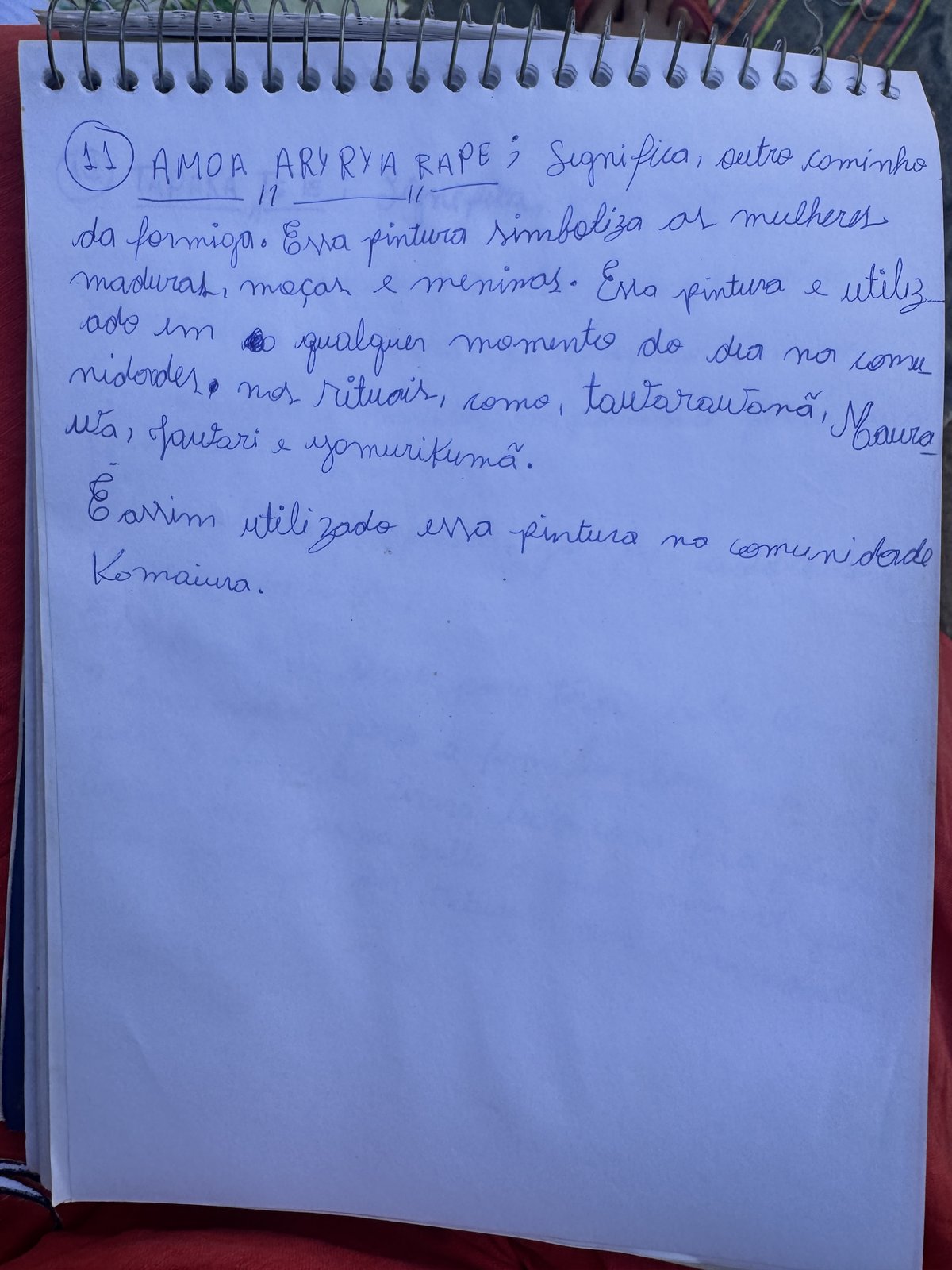
Ficha manuscrita 11 — AMOA ARYRYA RAPE
11 · AMOA ARYRYA RAPE

Significa: outro caminho da formiga

Means: Another ant's path

Simboliza as mulheres maduras, moças e meninas. Utilizada em qualquer momento do dia e nos rituais Tautarautonã, Maurauta, Jawari e Jamurikumã.

Symbolises mature women, young women and girls. Used at any time of day and in the Tautarautonã, Maurauta, Jawari and Jamurikumã rituals.

"Essa pintura simboliza as mulheres maduras, moças e meninas."Texto autodeclaratório · comunidade Kamayurá, 3 de julho de 2026
"This pattern symbolises mature women, young women and girls."Self-declared text · Kamayurá community, 3 July 2026
FemininoFemale
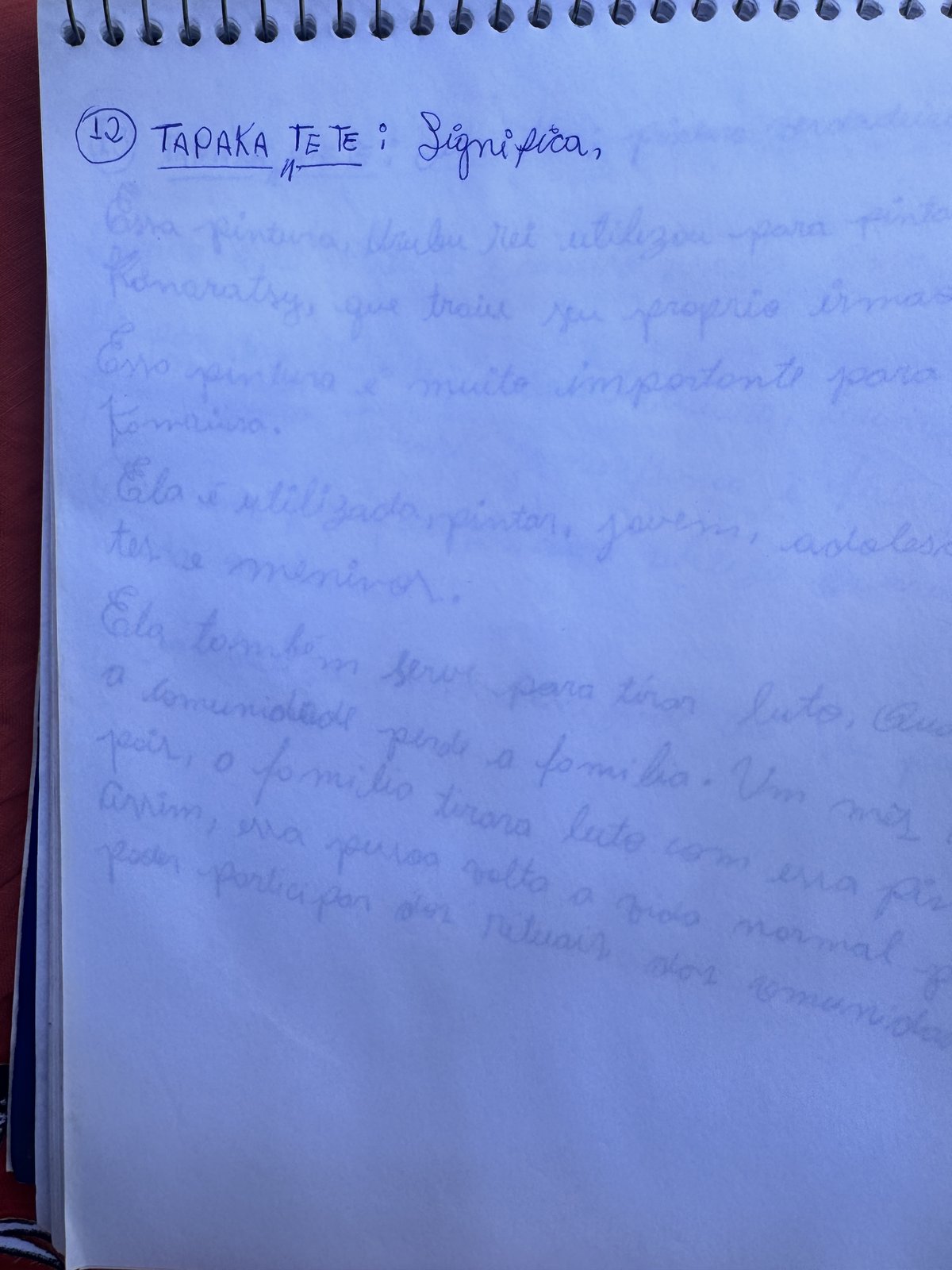
Ficha manuscrita 12 — TAPAKA TETE
12 · TAPAKA TETE

Ficha registrada, com o texto ainda a transcrever — a foto disponível não permite leitura segura. Será transcrita em campo com os autores.

Record made, text still to be transcribed — the available photograph does not allow a reliable reading. It will be transcribed in the field with the authors.

Transcrição pendenteTranscription pending
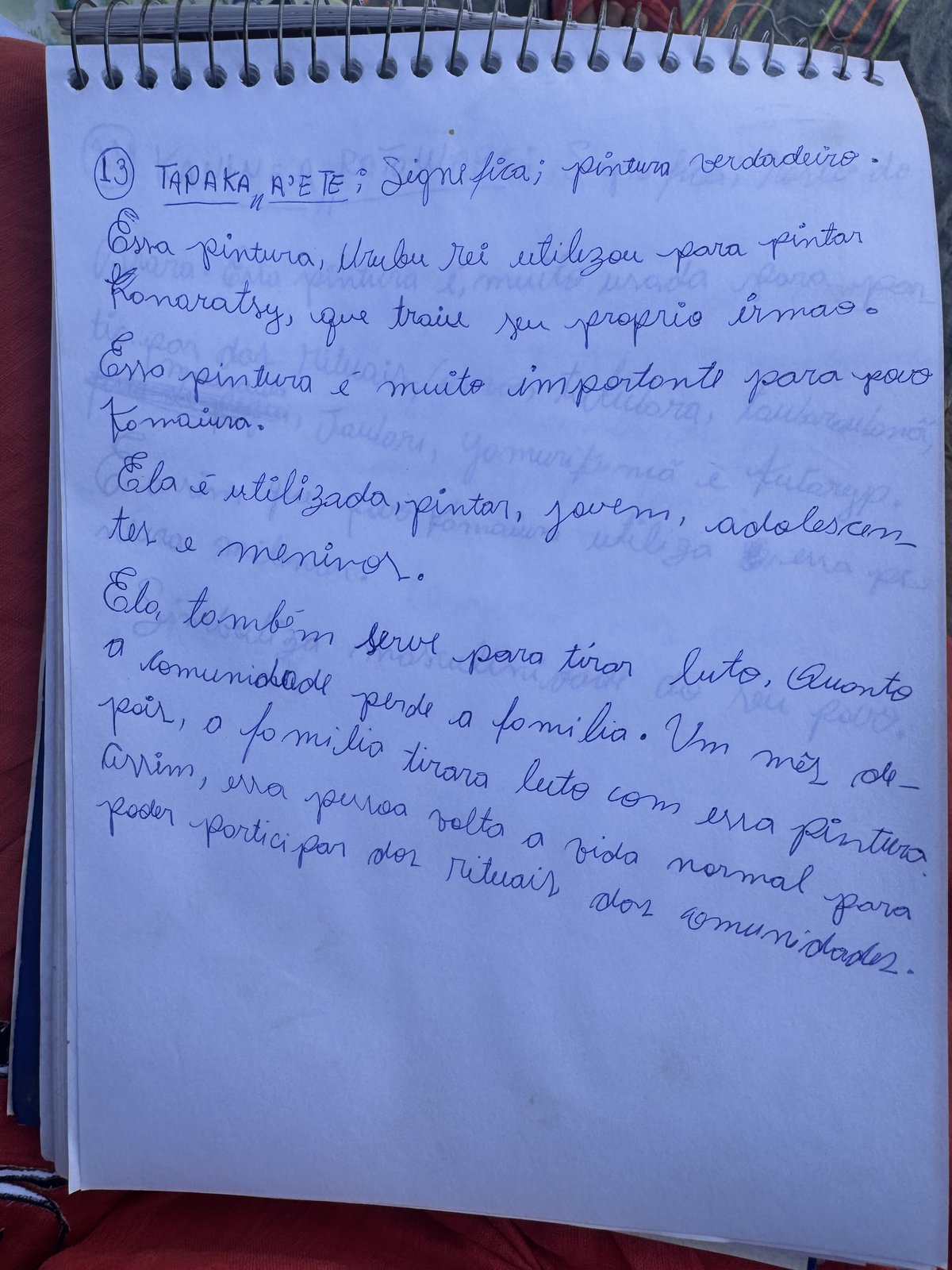
Ficha manuscrita 13 — TAPAKA A'ETE
13 · TAPAKA A'ETE

Significa: pintura verdadeira

Means: True pattern

O Urubu-rei utilizou essa pintura para pintar Konaratsy, que traiu seu próprio irmão. Utilizada para pintar jovens, adolescentes e meninas. Também serve para tirar luto.

The King Vulture used this pattern to paint Konaratsy, who betrayed his own brother. Used on young people, adolescents and girls. It also serves to lift mourning.

"Essa pintura é muito importante para o povo Kamayurá."Texto autodeclaratório · comunidade Kamayurá, 3 de julho de 2026
"This pattern is very important for the Kamayurá people."Self-declared text · Kamayurá community, 3 July 2026
RitualRitual
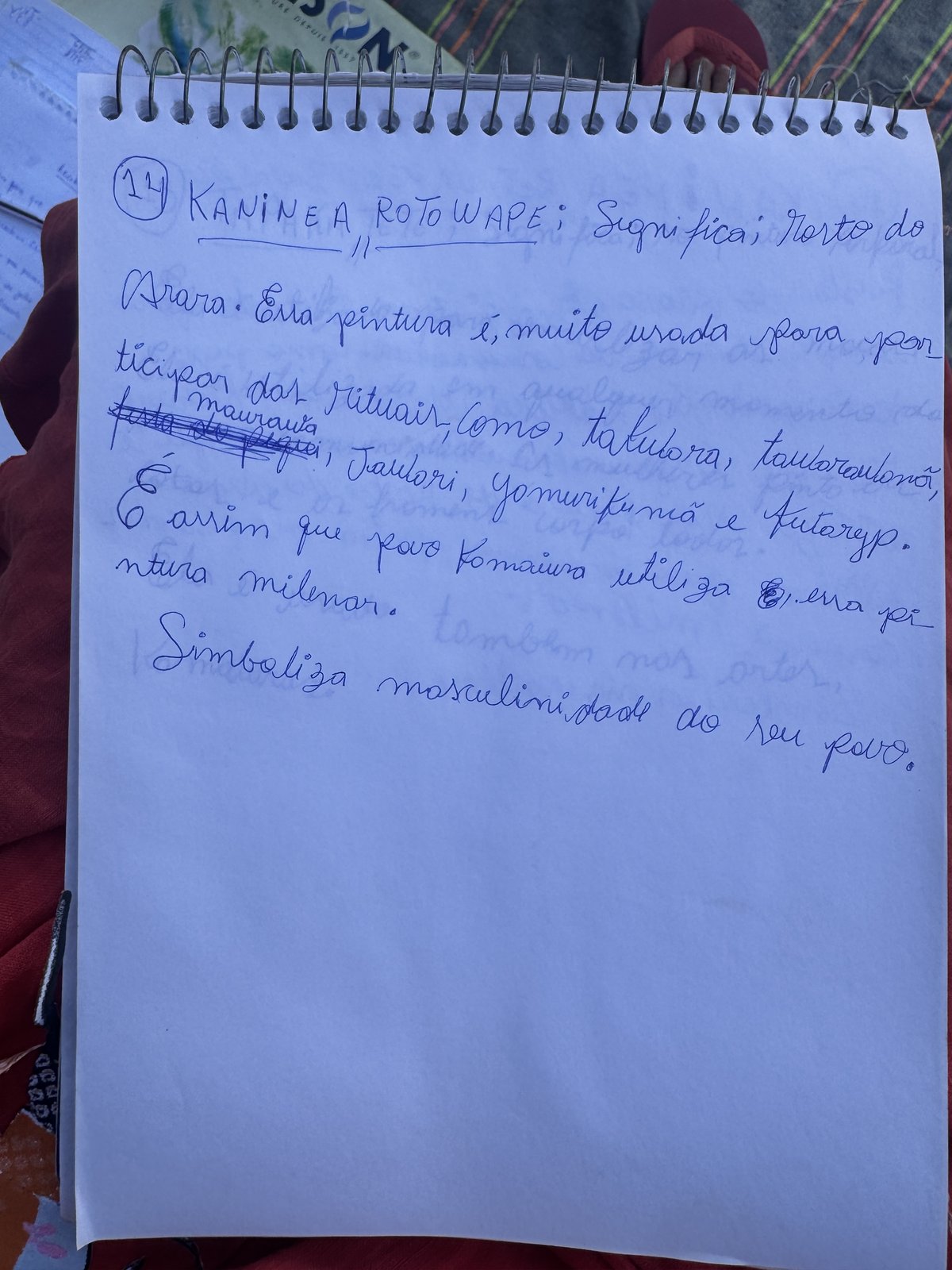
Ficha manuscrita 14 — KANINEA ROTOWAPE
14 · KANINEA ROTOWAPE

Significa: rosto da arara

Means: Macaw's face

Muito usada para participar dos rituais: Takutara, Tautarautonã, Maurauta, Jawari, Jamurikumã e Kuarup.

Widely used to take part in rituals: Takutara, Tautarautonã, Maurauta, Jawari, Jamurikumã and Kuarup.

"É assim que o povo Kamayurá utiliza essa pintura milenar. Simboliza o masculino."Texto autodeclaratório · comunidade Kamayurá, 3 de julho de 2026
"This is how the Kamayurá use this millenary pattern. It symbolises the masculine."Self-declared text · Kamayurá community, 3 July 2026
MasculinoMale
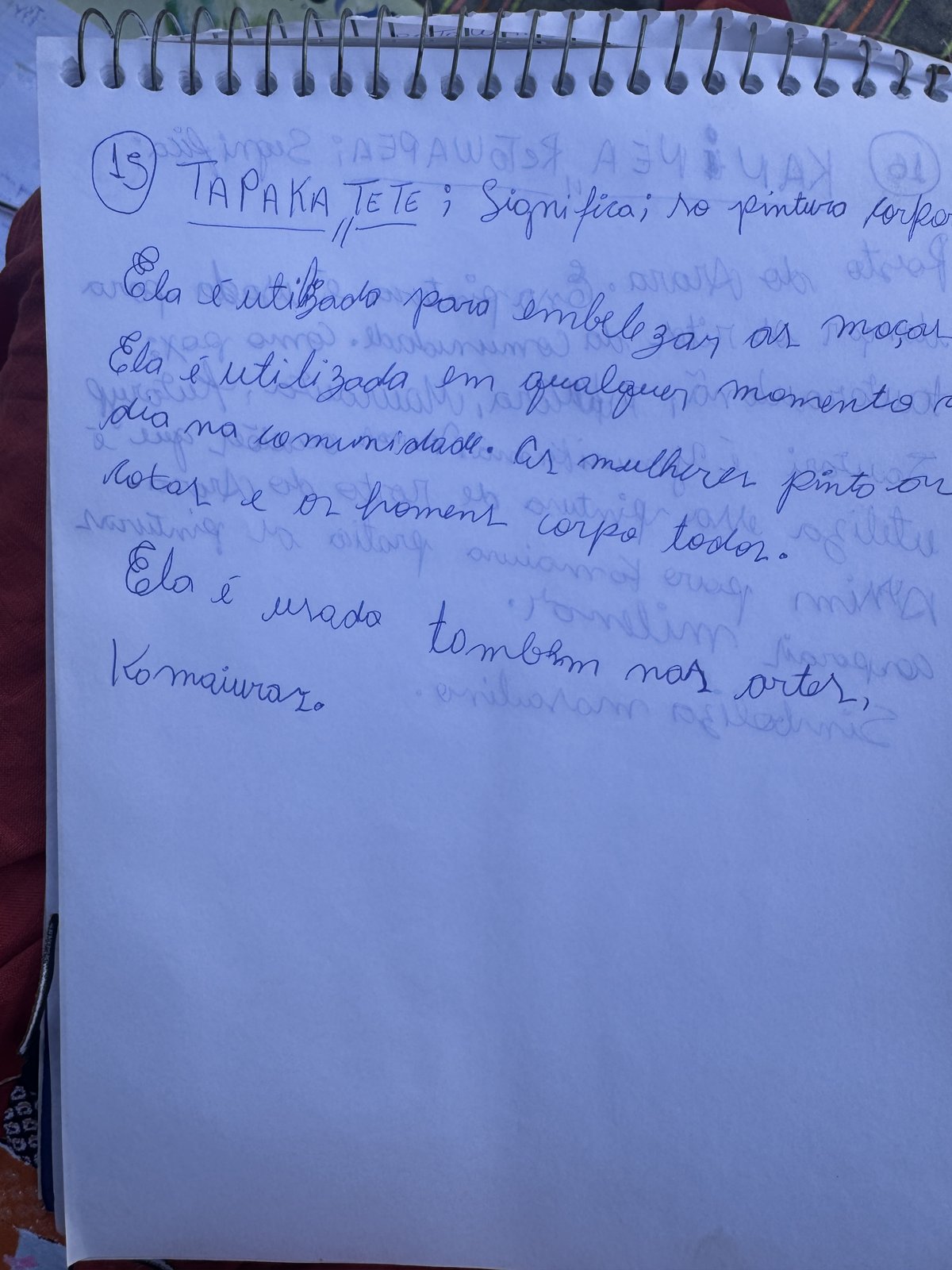
Ficha manuscrita 15 — TAPAKA TETE
15 · TAPAKA TETE

Ficha registrada, com o texto ainda a transcrever — a foto disponível não permite leitura segura. Será transcrita em campo com os autores.

Record made, text still to be transcribed — the available photograph does not allow a reliable reading. It will be transcribed in the field with the authors.

Transcrição pendenteTranscription pending
Ficha manuscrita 16 — KANINEA RETOWAPEA
16 · KANINEA RETOWAPEA

Significa: rosto da arara

Means: Macaw's face

Usada para dançar os ritos da comunidade: Tautarautonã, Takutara, Maurauta, Kuarup, Jawari e Jamurikumã.

Used to dance the community's rites: Tautarautonã, Takutara, Maurauta, Kuarup, Jawari and Jamurikumã.

"Assim o povo Kamayurá pratica as pinturas corporais milenares. Simboliza o masculino."Texto autodeclaratório · comunidade Kamayurá, 3 de julho de 2026
"This is how the Kamayurá practise their millenary body paintings. It symbolises the masculine."Self-declared text · Kamayurá community, 3 July 2026
MasculinoMale

Por que registrar

Why record

Em 2018, as gravuras rupestres da gruta de Kamukuwaká — lugar sagrado tombado pelo IPHAN, a poucas horas daqui — foram destruídas a cinzel. O tombamento não impediu. O que permitiu reconstruir os desenhos foi a documentação existente somada à memória dos anciãos. É por isso que se registra: o reconhecimento formal protege no papel; a documentação é o que resta quando a proteção falha no terreno.

In 2018, the rock carvings of the Kamukuwaká cave — a sacred site listed by IPHAN, a few hours from here — were destroyed with chisels. The listing did not prevent it. What made reconstruction possible was the existing documentation combined with the memory of the elders. That is why we record: formal recognition protects on paper; documentation is what remains when protection fails on the ground.